Author: Bruce Robbins

Columbia Chooses a New President

[IMAGE MISSING. IT’S HARD TO FIND AN IMAGE OF THE COLUMBIA BOARD OF TRUSTEES] I wrote this op-ed at the invitation of Columbia’s student newspaper, the Spectator. But the editors asked me to explain or justify so many things that it became clear everyone’s time was being wasted. Please let me know if you find anything here confusing or unjustifed. Since Lee Bollinger stepped down in 2023, Columbia has had three presidents. Each one has been a woman. Bollinger served for 21 years. So far, no female president has served for more than 13 months. It’s hard not to suspect that when the Board of Trustees chose these recent presidents, it was thinking of them as disposable, and that it was thinking of them as distractions—distractions because those of us who were (very properly) enthusiastic about having a female president would be less attentive to the fact that the real power behind the university lies with them, the Board of Trustees. When the Board announces a new president, people think they might be announcing a radical change in the administration. But the Board of Trustees is still there. It remains to be seen whether there will be any daylight between the new President and the old Board. Recognizing the Board’s unelected power and its recent history of using that power to questionable ends, Columbia’s branch of the American Association...

Read More
Reflections on Greatness

One thing people mean when they call something “great” is that it may not be nice. That great and nice don’t get along well together is the point of a scene toward the end of Gabriel García Márquez’s novel One Hundred Years of Solitude. Long after the death of Colonel Aureliano Buendía, soldiers of the Conservative regime come searching for his grandson, who is the last surviving witness of the banana worker massacre committed by that same regime. As they are leaving, one soldier politely asks if he can take as a souvenir one of the little golden fish...

Read More

The Hard Hat Riot of May 1970: A Slice of Non-Memoir

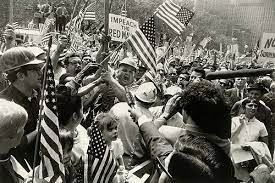
  The feminists of the 1970s, who pioneered the now classic idea that the personal is political, probably also devoted some attention to those of us who wish that our personal had been political, or more political. If so, I didn’t get the memo. But there must be many who would have to confess, with Nora Ephron, that we were wallflowers at the orgy. As we enter our 70s, not having missed the news about climate change and the general dimming of hopes for anything better than human survival, there comes a moment for retrospection, whether intro- or not....

Read More

My Dive

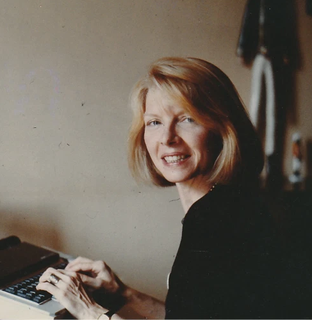
[What follows is an excerpt from the unpublished memoir of American journalist, translator, and “dispatriate” Frederika Randall (1948-2020). The excerpt is narrated by her Italian husband, Virgilio.] This is a story about Frances, a fascinating and dear American woman, my companion: about how she came to fall three stories from a balcony in Rome and what you might call the collateral damage of empire she sustained during Cold War times. I met her in New York, back in the early Reagan years. Daniela had just packed up all her things and moved back to Italy with the kids, and...

Read More

Stuart Hall and Marxism

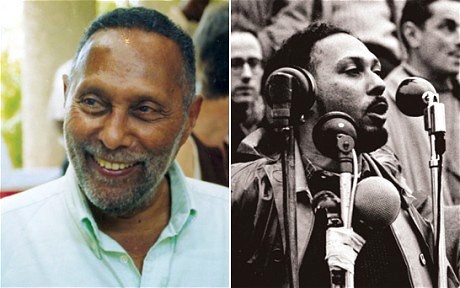
The following was delivered as a talk at a roundtable on June 30, 2021, organized by the Stuart Hall Foundation and Duke University Press, to mark the publication by Duke of Gregor McLennan’s “Stuart Hall: Selected Writings on Marxism.” The event was moderated by Catherine Hall and also featured Brett St Louis and Angela McRobbie as well as Gregor McLennan.   Gregor McLennan describes Stuart Hall as a mediator. Hall “can best be appreciated,” he says, “as a peerless dialectical mediator… He mediated within Marxism—structuralism/ culturalism; economism/ideologism; class/ nonclass social forces—and he mediated between Marxism and various non- and...

Read More